
Why Rest Feels Wrong (and Work Feels Virtuous)
featured in The Open Letters | by Kritika Oberoi

From Kritika Oberoi💌
I feel a frenetic, wired energy in the air at my local coffee shop on weekdays. Gone are the languid, Sunday readers and the gossiping cliques of friends. Instead, digital workers are medicating themselves with caffeine, frantically responding to emails at a feverish pitch that leaves you with a contact high.
I’ve been this person—adrenaline and cortisol coursing through my veins, hyper-focusing my attention on the wording of that last email, or the punctuation on this slide, watching the minutes tick by as I near an important meeting, the pressure building between my ears and through my shoulders. At the end of these days I often felt good, but tired. I felt like I had accomplished something. That I was focused and driven and productive.

All my life I’ve unquestioningly believed that one must work hard. I’ve looked at peers who lack drive with judgement or concern, I’ve felt shame at my own procrastination, and wholeheartedly praised the achievements of the successful. I suspect I’ve held these views for longer because I was good at hard work—I did well in school, got good jobs and excelled at them. Much like a core tenet in religion, the moral obligation to work hard seeped into my mind by osmosis early in life, reinforced everyday by society, media, and my own success.
These days I’ve been zooming out from this scene and looking at it with the lens an alien might employ. When you zoom out, you’re able to look up from the minutia, away from the processes and mores you’re taught to accept blindly and look at the system as a whole. At that angle, the lighting feels off. Instead of the bright light that casts a golden halo over the productive and successful, you see the blue-white glow of a doctor’s office. The light is a little too honest, a little too telling. By this light you see things differently.
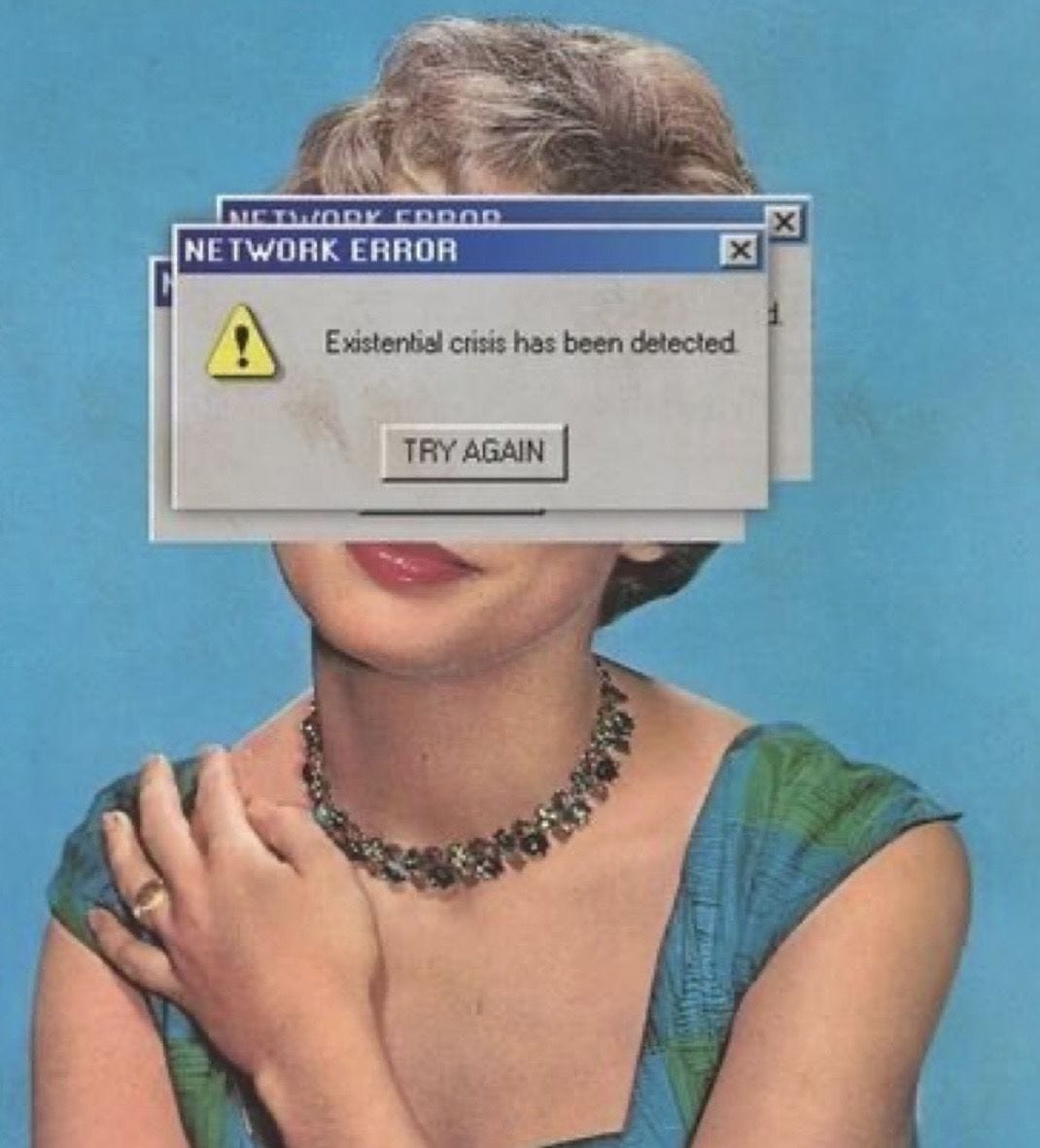
I’ve been trying to examine the moral implication of hard work. When did work become the bulwark of a good person, success the proof of our worth. When did the term “hard worker” become less statement of fact, and more a compliment.
As someone who lives in their mind a lot, the first step for me is to understand the forces that make people obsessed with productivity. So I started reading and learning—what does human history say about work? Are we biologically wired to have a purpose and career?
The answer surprised me.
Hunt, gather and relax
For 95% of human existence, people haven’t worked that hard. For 300,000 years hunter-gatherers worked all of 4 or 5 hours a day, cooking, hunting and creating shelter. Often the work would ebb and flow—a big hunt for a few days, followed by a week or two of rest. Meanwhile, I spend nearly 4 hours a day outside of work trying to keep my life together—getting groceries, organizing the home, and keeping myself and my pets alive.
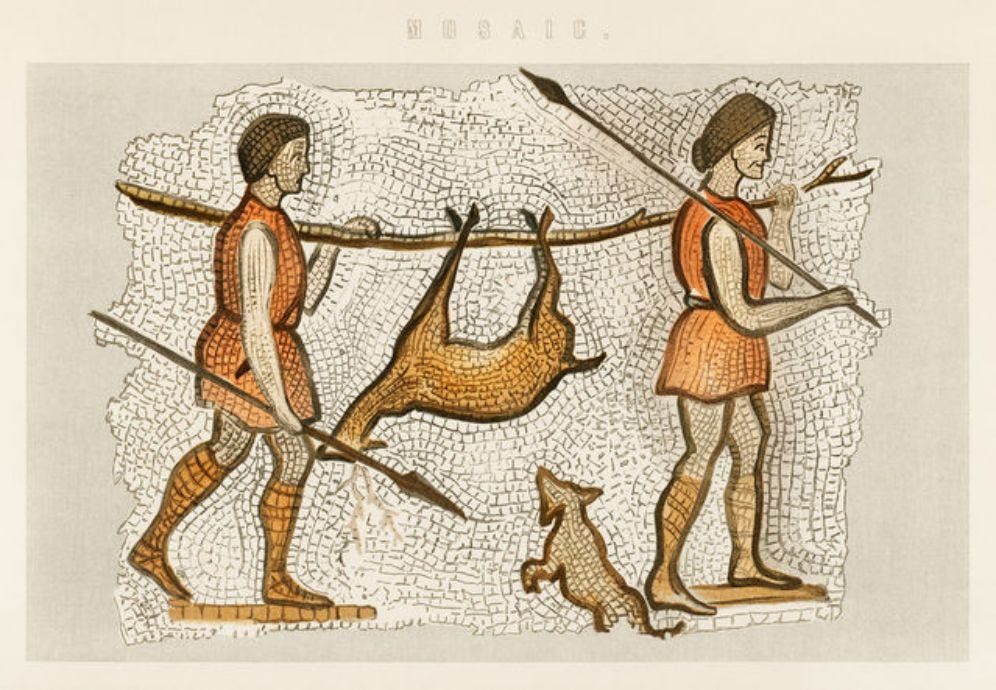
Eventually circumstances pushed humanity into the agricultural revolution ~12,000 years ago, when serfs worked and landowners had it easy. At this time in history, high status was defined by not having to work.
In fact, most of human history looks this way—avoidance and hatred of work was the status quo in many cultures. When Adam and Eve defy God’s wishes in the bible, their punishment is work. Ancient Greek men enslaved others to work, so they could spend time on politics and philosophy instead (I definitely don’t condone that one).
Digging through the history of work was actually really confusing for me. If most of human existence was spent despising and avoiding work, how did we get to our current reality where unproductivity is the world’s biggest sin?
Protestants work
Like many things in our world, it all started with religion. Specifically, protestants.
Protestant Christians in northern Europe believed that there were just a few select seats in heaven. Obviously everyone wanted these seats, but not everyone could have them. It turns out that Hermès’ marketing strategy of artificial scarcity dates back to the 1500s.
Protestants believed that God would show you if you were amongst his “chosen ones” who could reach heaven. They thought the anointed would show their spiritual favor in the form of material wealth.
Fueled by this belief, northern Europeans started working hard, saving money, and re-investing their earnings. In some ways this shift was good—work was finally dignified and worthwhile. The challenge is that it also became moral. If you were good, you worked hard to get into heaven.
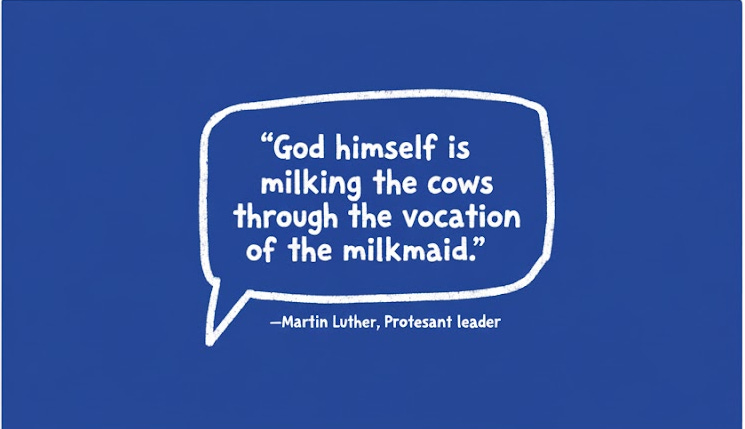
Powered by capitalism, we’ve skewed this world view further and further to expect more and more from our work. Work is no longer just a means to an end, a way to feed or clothe ourselves. For many of us, work is now a core part of our identity and a way for us to measure our worth in society.
The moral imperative to work
The morality of work is a social construct, a.k.a. totally made up. In fact, it’s something we invented relatively recently. How much you worked said nothing (positive) about your morality until ~500 years ago. For 99% of human existence—hundreds of thousands of years—no one was measuring their worth by long hours worked and deadlines met.
And yet, a lot of us feel so beholden to this concept. We feel bad if we are unproductive. We’ve “wasted the day” if we sleep in.

As we clock in and clock out of our jobs for the next 100 years, it may serve us to remember that for hundreds of thousands of years people didn’t really work that much. We’re not biologically wired to work 15 hour days, and it’s not normal for us to live under the constant pressure of deadlines and slack notifications.
About the Author:
Substack ID: Kritika Oberoi
Have something to share? Submit your own reflections or stories to be featured in The Open Letters. Send your work to hasifnewsletter@gmail.com. For more details, check out this post: Submit your Essays and get Featured.
Hasif,
Editor-in-Chief, The Open Letters
Really interesting. And I think this 'resting' becomes particularly poignant upon early retirement. Suddenly your identity and sense of worth in society stops being measured by your job title or the hours you spend managing complex negotiating or skilful customer relations. Overnight a change comes about and it takes a while to realise your place in society is still very valid. Finding a new path where productivity shifts into a different realm, and resting doesn't feel so wrong takes time to adjust to 😊
I saw the title of this article and shouted “capitalism” 😂