
Kosmic blues
featured in The Open Letters | by Petri Tapani Ervasti


auto-fictional short story by: Petri Tapani Ervasti💌
I searched for peace in the cemetery as the evening darkened. I couldn’t remember how many nights I had spent there since the breakup. During the day, I walked the streets of Jyväskylä aimlessly, back and forth as if in a dream.
I lay on a garden bench under the shelter of lichen-covered rowan trees. I looked at the sky beneath the infinite void and inhaled the smoke greedily. The purple evening heralded the continuation of the heatwave. I thought that God must have been hellishly alone when creating all this. I rose from the bench, unable to stay still any longer than the smoke.
As the night deepened, I circled the gravestones and collected withered flowers. Born, died. Born, died. By the decaying wooden crosses, I thought that not everyone even leaves a name on a stone. The forgotten souls drew me in, and soon I began to speak to the dead out loud.
In the warm night of late summer, I wasn’t cold. When the birds woke at the break of dawn, I left in a daze towards the city center. I sat on the edge of the pedestrian street’s water fountain in the early August morning. Vagrants began to emerge from their hiding places and gathered on benches with their backpacks and plastic bags. I cupped water in my hands and drank.
I found my wallet in my pocket: two crumpled twenty-euro notes. My phone was dead. I had run out of cigarettes. I knew the Shell next to the Travel Center was open all night. I went to bum a cigarette from a man whose presence was bearishly gentle. He wore a green, stained winter coat, even though it was midsummer. The gray-bearded, weathered man dug a crumpled pack of cigarettes from his pocket and asked me to sit down. He said he had once been a municipal manager. I said I had done construction work last year. The man measured me with his murky eyes from feet to head and asked:
“How many years have eyes that blue looked at the world?”
“In my childhood, orange plastic chairs filled smoky Kesoil gas stations, and Hurriganes played on the jukebox,” I replied.
The man smiled, hummed ‘I Will Stay’ for a moment, and pulled an unopened Estonian vodka bottle from his pocket.
“Nothing worse than misery?” he asked and handed the bottle to me.
I uncorked it, tasted it. The smooth, warm liquor didn’t taste bad. I took a long gulp. “Sorry, I gotta go. Thanks, but I’ve been a little too get on...” I muttered.
The man patted my shoulder.
“You have to go. And the word is free to move.”
At the gas station, taxi drivers were drinking their morning coffee on the terrace. I bought green menthol cigarettes and asked for a glass of water. It was half past six. The smell of gasoline, the flow of cars, and the steady hum covered the voices inside my head.
I craved red wine. The vodka had calmed my mind. I smoked a cigarette every half hour, and at nine, I walked to Alko. I bought two cheap red wines and went to the church park under a birch tree. I drank the first bottle slowly and stared at the cross on the church tower. The pace of the whispers in my head quickened.
The voices told me to flee. I started running. I slammed the full bottle of wine against the church wall. Suddenly, someone grabbed me forcefully from behind. The police dragged me, handcuffed, into the police car’s compartment. The officer asked:
“Who are you?”
I answered incoherently: “Peter Pan,” and lost consciousness.
I woke up in a room with a thick blue mattress and a pillow on the concrete floor. The blinds were shut, the steel floor drain was bolted with screws. The walls were pastel green, the door blue. I was hot, sweating. I tried to open the vent, but the handle was missing. The door was locked. I couldn’t remember how I had ended up here, but I knew I was in mental hospital.
A fair-haired, sturdily built woman entered the room.
“Hi, I’m Elsa, your primary nurse. You need to rest now.”
She gave me a plastic capful of a pink liquid and said it would help me feel better. I saw a white aura around the woman. It calmed me, and I drank it.
My muscles were like intertwined steel cables. My feet were chafed into bloody blisters. The tension eased slightly, and I lay down. Finally, I didn’t feel the urge to pace back and forth.
I closed my eyes and imagined I was on an airplane, in a sealed chamber traveling somewhere. The patterns on the curtain fabric resembled the protozoa appearing in the frost on a beer glass. The voices in my head turned into soft whispers.
The pastel-green wall brought back memories of the cardboard-surfaced lining paper in my grandmother’s cottage. I stroked the concrete wall, and the cottage smelled of pipe tobacco. My mind craved calming smoke, but smoking was not allowed on the airplane. My fingers were stained with nicotine. My eyelids drooped, violet ornaments floated in my field of vision. The delusional reality darkened and silenced, tasting of strawberry.
The nurse woke me up and brought food on a tray. I ate a banana, drank coffee, and devoured the porridge. I couldn’t remember the last time I had eaten. I asked for a cigarette. Elsa nodded and escorted me to a tiled booth, floor to ceiling.
I lit a cigarette with a lighter attached to a chain. The tiles were pastel-colored. A thin man dressed in black stood in the corner of the booth, quietly smoking a pipe.
Through the window, I could see the inner courtyard and ornamental apple trees. A squirrel greedily ate the unripe fruit and collapsed onto the ground. I sat on the floor. A nurse standing in the hallway opened the door a crack and pointed out that sitting down was inappropriate.
The man dressed in black said quietly:
“There used to be benches here. Now they’ve been taken away, so you wouldn’t get comfortable.”
I remained silent. The hum of the ventilation turned into the whispers of forgotten souls. The booth was cool. Still, I sat and watched the gray ascent of the smoke. The man emptied his pipe into a pickle jar and left.
I started when the burning filter scorched my finger. The nurse asked me to come with her.
In the dressing room, she gave me a gray pajama set with a violet stripe and clean underwear. The room had a made bed, a small table, and a toilet with a shower stall. I received a comb, a toothbrush, and paste. I was told to wash up and wait.
The shower eased the grogginess, but a storm raged inside me. I paced back and forth in the room. The venetian blinds were stuck. I noticed a radio panel on the wall and switched it on. Janis Joplin was playing on the radio. I turned the volume all the way up. Kosmic Blues covered the whispers.
Elsa came into the room and asked me to turn off the radio.
“We have a meeting with the doctor now.”
The psychiatrist had a pink collared shirt. I couldn’t look him in the eye; my gaze clung to the two unbuttoned buttons of her light blue stonewashed jeans.
“Do you know what day it is?” she asked.
I was silent. I noticed pink panties underneath the jeans.
“And why are you here?”
“Your buttons are undone.” I muttered, and began to cry.
Elsa offered a tissue.
“You’ll make it. You are safe here.”
About the Author:
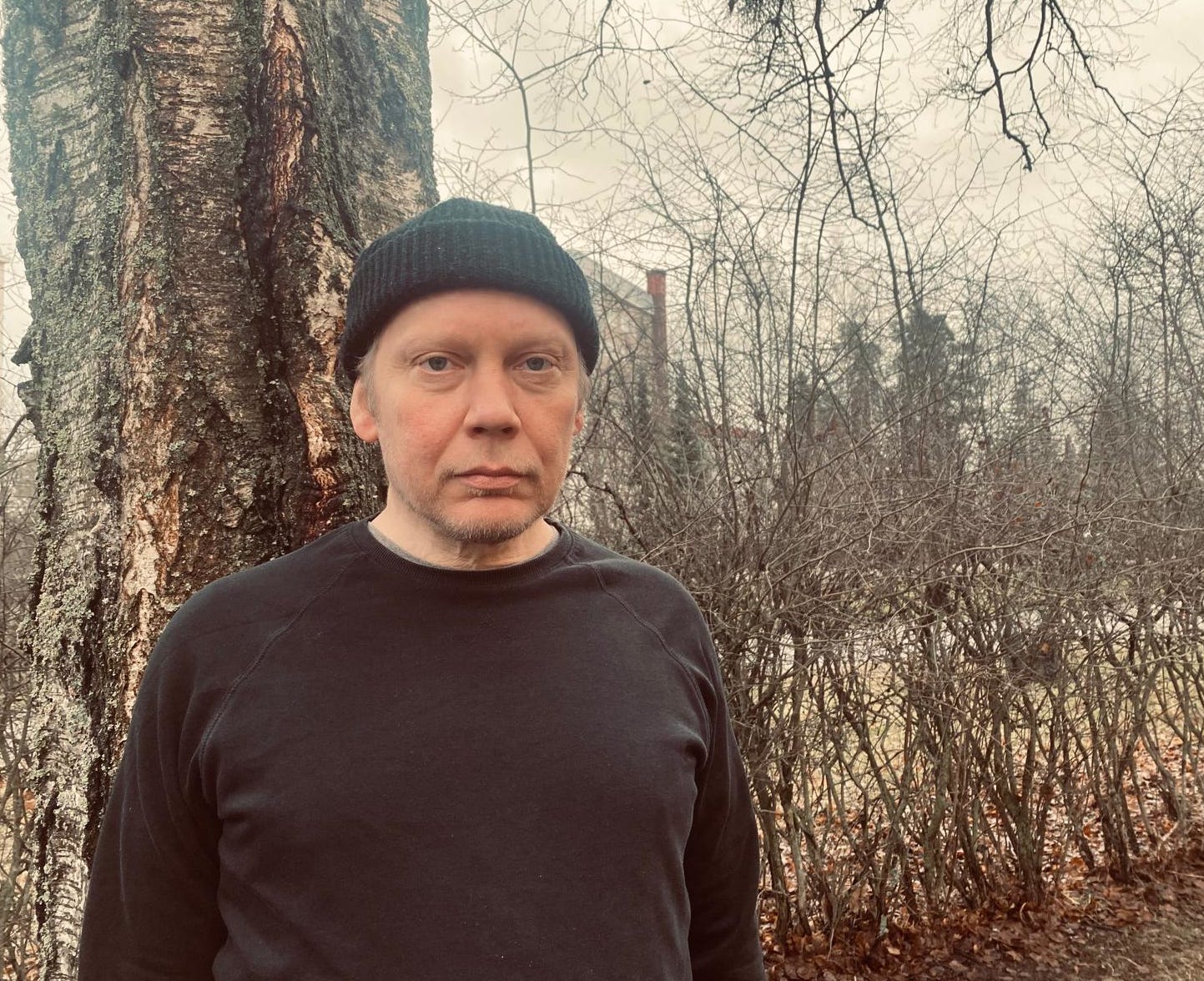
Petri Ervasti (b. 1975) is a Finnish poet and writer whose work dwells at the edge of dream and wakefulness. Weaving together memory and the unconscious, he writes to reveal where sorrow and beauty intersect. His poetry and prose serve as a quiet invitation to step into the cracks of reflection.
Substack ID: Petri Tapani Ervasti
Have something to share? Submit your own reflections or stories to be featured in The Open Letters. Send your work to hasifnewsletter@gmail.com. For more details, check out this post: Submit your Essays and get Featured.
Hasif,
Editor-in-Chief, The Open Letters
 | A guest post by
|
love it thanks for sharing
I see the art in this story and I admire your skill, Petri. Keep it up.